


NL
NL
NL
Neem contact op

Dank je wel! Je inzending is ontvangen!
Oeps! Er is iets misgegaan tijdens het verzenden van het formulier.

Get in Touch
Thank you! Your submission has been received!
Oops! Something went wrong while submitting the form.



Christmas markets are one of the most visible public event formats in Europe. They create seasonal business, attract large visitor flows and play an important role in local culture. But they also generate high volumes of packaging waste, especially in food service. The newly published WWF-led guide on reuse for Christmas markets is aimed at municipalities across Germany and focuses specifically on reusable solutions for food offerings, since drinks are already often served in reusable formats. The core message is clear: reuse does not fail because of the container. It succeeds or fails because of the system behind it. The guide highlights that implementation requires coordination across financing, logistics, washing infrastructure and communication with vendors. At the same time, it shows that functioning systems are achievable and can reduce waste, lower disposal costs and improve overall event cleanliness.
For municipalities, the move to reuse is not just a procurement decision. It is an operational setup that needs clear responsibilities, reliable logistics and early coordination with all relevant stakeholders. The guide was developed to support municipalities step by step and to show, through real examples, that implementation is feasible when there is commitment, cooperation and a practical roadmap. The materials also stress that success depends on a shared understanding between municipalities, organisers, vendors and service partners. Reuse becomes workable when it is integrated into the event model from the start, rather than added later as a sustainability extra.
A strong takeaway from the guide is that there is no universal model. Christmas markets differ in size, infrastructure, stakeholder setup and local policy environment. That means the right approach depends on real local conditions, including what kind of washing, storage and logistics concept can be supported in practice. When municipalities choose a pooled reusable system, they also choose a more centralised structure for products and operations. That can simplify the experience for vendors and visitors, but it requires strong coordination, annual demand planning and close alignment with stand operators. The guide explicitly recommends regular exchange with vendors and structured demand collection to determine which reusable formats are actually needed.
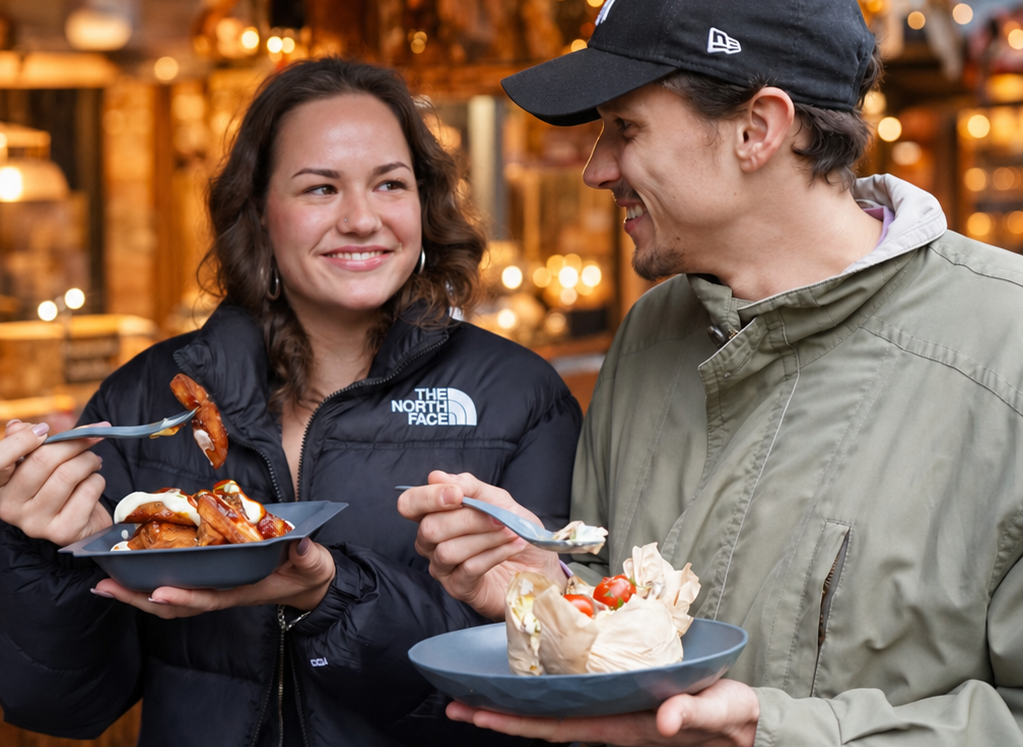
The guide names Konstanz as a best-practice example and states that the Christmas market has used a standardised pooled system in cooperation with Vytal since 2024. What makes Konstanz especially relevant is that the city also operates a broader municipal reuse infrastructure through its waste management entity. According to the case study, the city has offered a mobile washing unit since 1996 and provides reusable tableware for rent as part of its support for waste reduction at events. This model is supported by local regulation as well: since 2019, single-use packaging has been banned at public events in Konstanz, and since 1 January 2025, a packaging tax applies to single-use takeaway packaging for direct consumption.
The Konstanz case shows that successful reuse is not only about having containers available. It is about combining political backing, operational capacity and service design. The local setup includes washing capacity, transport services, rental structures and municipal coordination. That makes the example relevant for other cities looking at how to move beyond isolated pilots toward stable, repeatable implementation.
One of the strongest insights from the Konstanz case study is that transferability depends less on the size of the municipality and more on the size of the event. The case study states this explicitly and notes that the existing washing-mobile setup is especially suited for smaller to medium-sized events, while larger events may require additional support or partnerships with specialised providers. The study further outlines a practical model by event scale: small events can often be covered through municipal offerings, mid-sized events may benefit from cooperation between municipalities and system providers, and large events are more likely to require dedicated provider-led solutions.
The Konstanz material is also helpful because it does not present reuse as frictionless by default. It points to real operational challenges, including staffing effort, sorting, cleaning, transport and administration. In other words, reuse needs capacity behind it. The value of the case lies in showing that these demands can be managed when municipalities build a realistic financial and operational concept around the system.
The Christmas market guide frames reuse primarily as a resource-protection measure, but also points to broader benefits such as lower waste volumes, reduced CO2 emissions and lower municipal disposal costs. The Konstanz case study supports this with concrete impact data from its broader municipal washing-mobile model. It reports annual savings compared with single-use packaging, including avoided CO2 emissions, reduced waste and lower water impact under the right operating conditions. At the same time, the study makes clear that these benefits depend on efficient washing, low loss rates and frequent circulation of reusable items. That is an important point for municipalities and organisers alike: reuse creates the strongest impact when the full system is designed for return, recirculation and reliable operation.
The current timing matters. Cities do not redesign market operations a few days before opening. The right moment to shape a successful reuse setup is during planning: when rules are defined, service models are chosen, vendors are informed and logistics are clarified. The WWF-led guidance was created to help municipalities do exactly that. It is designed as a practical roadmap and offers examples, materials and additional resources through the Wegweiser Mehrweg platform. For cities planning their 2026 Christmas market, the message is simple: do not start from scratch. Start from what already works.
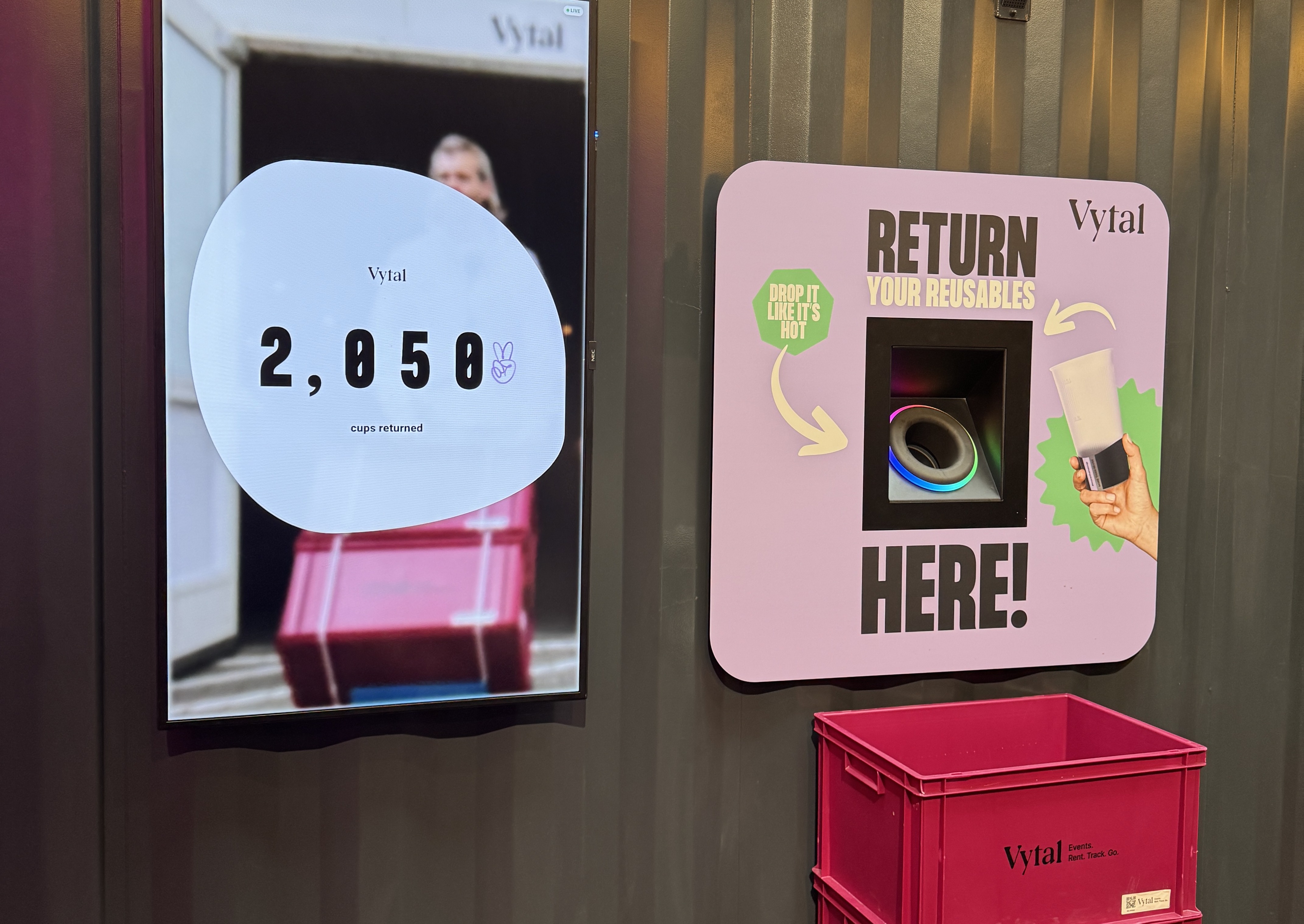
At Vytal, this is the key takeaway.Reuse works best when it is built as infrastructure, not treated as an add-on. That means creating systems that are operationally viable for organisers, practical for vendors and intuitive for visitors. It means aligning products, logistics and return flows with the real conditions on site.The new public guidance and case materials are an important step because they move the conversation forward from theory to implementation. They show that municipalities already have working models to learn from — and that now is the time to turn those learnings into action.





.png)


.png)


